
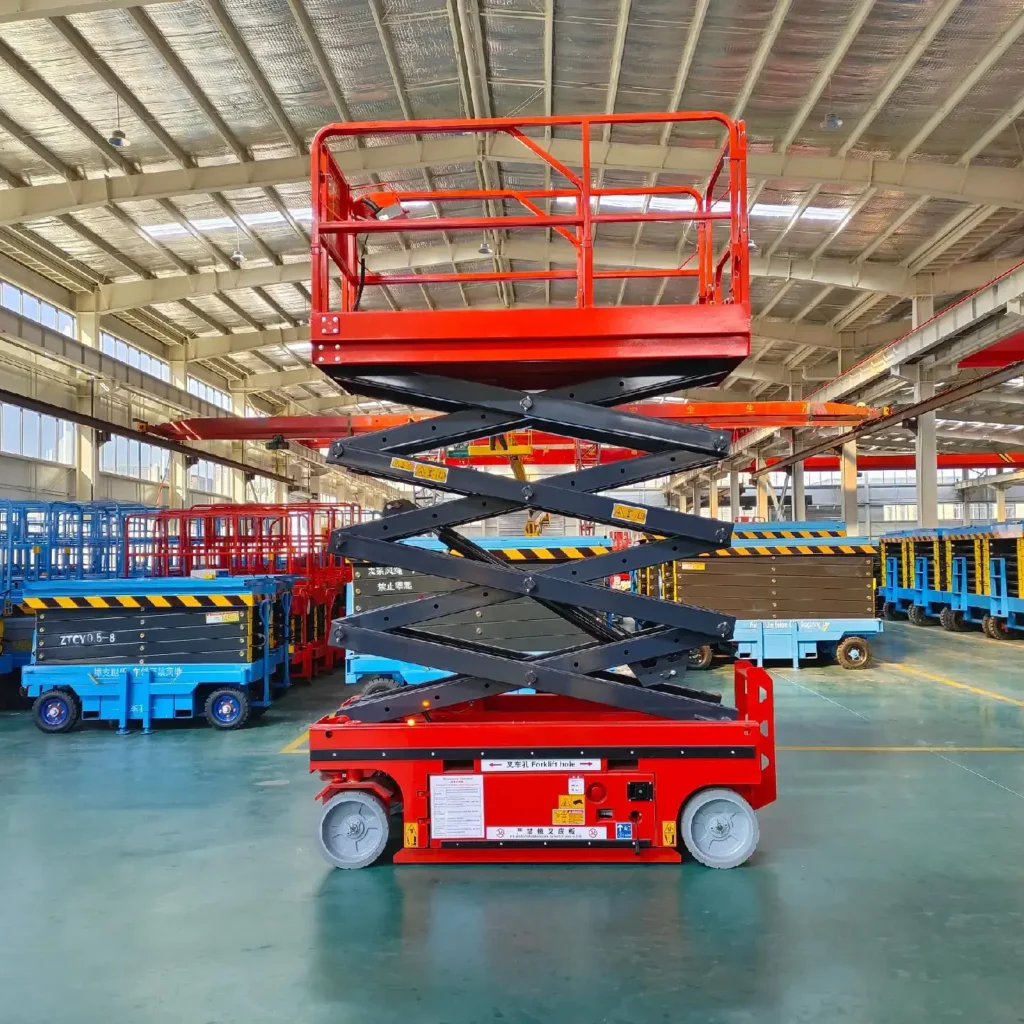
Navigating the global aerial equipment market requires a clear understanding of equipment acquisition budgets and operational expenditure. Estimating a realistic electric scissor lift price involves analyzing vertical working height specifications, battery technology, hydraulic configurations, and international logistics fees. Equipment buyers who focus solely on baseline machinery quotes often face unexpected cost overruns during customs clearance and site deployment.
Whether you are procuring a single unit for a warehouse facility or acquiring a broad fleet for commercial construction equipment rental, evaluating the total cost of ownership is critical. Modern mobile elevating work platforms offer diverse power options—from classic flooded lead-acid batteries to long-life lithium-iron-phosphate (LFP) systems—each directly influencing the final purchase invoice and long-term operating costs.
In this comprehensive guide, we provide a transparent breakdown of baseline factory quotes, detailed working height price tiers, optional equipment upgrades, international shipping logistics, and practical strategies to negotiate the best factory-direct electric scissor lift price.
Table of Contents
- Baseline Electric Scissor Lift Price Ranges by Height Class
- Detailed Model Price & Feature Comparison Table
- Primary Technical Drivers Influencing Machine Cost
- Lead-Acid vs. Lithium Battery Price Impact
- International Freight, Container Packing, and Customs Duties
- New vs. Used Equipment TCO Breakdown
- How to Optimize Procurement and Reduce Factory Quotes
- Frequently Asked Questions (FAQ)
- Conclusion and Next Steps
Baseline Electric Scissor Lift Price Ranges by Height Class
Machine elevation capability remains the primary engineering variable determining the baseline electric scissor lift price. As working height requirements increase, manufacturers must engineer thicker scissor arms, larger hydraulic lift cylinders, and heavier steel base chassis to maintain structural stability under full elevation.
Compact 6-meter (19 ft) slab units designed for indoor facility maintenance start at competitive factory entry points. In contrast, heavy-duty 16-meter (52 ft) high-reach models require specialized counterweights and dual-drive hydraulic systems, increasing the baseline cost accordingly.
Understanding these baseline price brackets allows procurement managers to align jobsite specifications with capital expenditure allocations before issuing formal procurement requests.
Detailed Model Price & Feature Comparison Table
Evaluating standard commercial specifications across height tiers helps fleet managers budget accurately for direct machinery investments.
| Working Height Class | Platform Height | Average Electric Scissor Lift Price Range (FOB) | Standard Battery Setup | Typical Machine Weight |
|---|---|---|---|---|
| 6m (19 ft) Micro | 4.0 m | $6,200 – $8,500 | 24V Lead-Acid (4x 6V) | 1,100 kg – 1,300 kg |
| 8m (26 ft) Standard | 6.0 m | $8,200 – $11,500 | 24V Lead-Acid / AGM | 1,500 kg – 1,800 kg |
| 10m (32 ft) Mid-Range | 8.0 m | $11,000 – $14,800 | 24V Deep-Cycle Lead-Acid | 2,000 kg – 2,300 kg |
| 12m (39 ft) High-Bay | 10.0 m | $13,500 – $18,200 | 24V / 48V High-Capacity | 2,700 kg – 3,100 kg |
| 14m (45 ft) Industrial | 12.0 m | $17,500 – $23,000 | 48V Lead-Acid or Lithium | 3,200 kg – 3,600 kg |
| 16m (52 ft) Maximum Reach | 14.0 m | $22,000 – $28,500 | 48V Lithium-ion (Standard) | 3,800 kg – 4,200 kg |
To evaluate detailed elevation math and dimensional specifications across these height tiers, refer to our comprehensive scissor lift working height guide and review platform weight capacity thresholds in our scissor lift load capacity guide.
Primary Technical Drivers Influencing Machine Cost
Beyond basic vertical extension, several technical factors directly influence the quoted electric scissor lift price when sourcing machinery directly from OEM factories:
- Drive Motor Technology (DC vs. AC Electric Drive): Traditional direct-current (DC) drive motors provide reliable power at a lower initial machine cost. Modern alternating-current (AC) brushless electric drive systems increase upfront quotes by 8% to 12% but deliver superior energy efficiency, smoother proportional control, and zero motor brush maintenance.
- Platform Extension Decks: Standard manual slide-out extension decks (typically 0.9m) add minimal cost while expanding platform area. Heavy-duty dual extension decks or powered roll-out platforms add $600 to $1,500 to the total unit invoice.
- Chassis Width & Structural Steel Quality: Ultra-narrow chassis designs engineered to fit through standard doorway headers utilize high-tensile structural steel. Higher raw material grades slightly elevate the base machine cost but guarantee long-term frame durability.
- Hydraulic Component Standards: Premium hydraulic pump units, proportional lift valves, and integrated leak-prevention manifolds add roughly $500 to $1,200 to the electric scissor lift price compared to basic hydraulic assemblies.
Lead-Acid vs. Lithium Battery Price Impact
The choice of electrical power source is one of the most substantial hardware factors determining the total electric scissor lift price during initial equipment purchasing.
Standard flooded lead-acid batteries represent the lowest upfront initial outlay. However, they require routine distilled water topping, dedicated battery charging rooms to manage gassing, and periodic equalization charges. Maintenance-free AGM (Absorbent Glass Mat) batteries offer moderate upgrade costs without fluid upkeep.
Lithium-iron-phosphate (LiFePO4 or LFP) battery technology adds approximately $1,800 to $3,500 to the initial electric scissor lift price depending on amp-hour rating and system voltage. Despite the higher upfront investment, lithium batteries provide distinct operational benefits:
- 3,000+ Charge Cycles: Delivers 3x to 4x the operational lifespan of traditional flooded battery packs.
- Opportunity Charging: Fast charging during shift breaks without memory effect, eliminating battery swapping.
- Zero Maintenance Overhead: Completely sealed construction eliminates fluid checks, terminal corrosion, and dangerous acid spills.
For an in-depth operational cost analysis of battery life cycles and charger compatibility, review our specialized scissor lift battery guide.
International Freight, Container Packing, and Customs Duties
Calculating the true landed cost requires factoring international logistics and import tariffs into your baseline electric scissor lift price calculation. When importing machinery directly from factory hubs, freight arrangements dictate total expenditure.
Key ocean freight logistics considerations include:
- Container Space Optimization: Standard 20ft and 40ft High Cube (40HC) shipping containers hold multiple units. For instance, a 40HC container accommodates up to 10 units of 6m micro scissor lifts or 6 units of 10m models. Maximizing container packing density significantly lowers per-unit transport cost.
- Import Tariffs and HS Code Classification: Mobile elevating work platforms fall under specific Harmonized System (HS) codes (typically HS 8428.90). Depending on destination country trade agreements, import customs duties range from 0% to 6.5%.
- Local Destination Terminal Handling Charges (THC): Local port fees, customs clearance documentation, and inland flatbed trailer transportation add $500 to $1,500 per shipment batch.
To optimize container space and ensure safe transit packaging during ocean transport, consult our step-by-step tutorial on scissor lift container loading and learn complete factory procurement procedures in our guide to importing scissor lifts from China.
New vs. Used Equipment TCO Breakdown
Equipment buyers frequently debate whether to buy a brand-new factory unit or a secondhand rental machine to minimize upfront expenditure. While a used machine presents an attractive initial purchase figure—often 40% lower than a factory quote—the total cost of ownership (TCO) over a 5-year operating window tells a different story.
Used machines often come with worn hydraulic hoses, aging lead-acid battery packs near the end of their operational life, and outdated safety control modules. Replacing a depleted battery pack and hydraulic wheel drive motor on a secondhand unit can easily cost $2,500 to $4,000, wiping out initial acquisition savings.
Investing in a new factory-direct unit guarantees full manufacturer warranty coverage, zero component wear, modern safety sensor compliance, and optimal energy efficiency. Furthermore, modern safety design rules established under ANSI A92.20 standards mandate automatic pothole protection and platform load sensing systems that older secondhand models may lack.
All safety inspection protocols and operational guidelines for elevated platforms are governed internationally by IPAF (International Powered Access Federation) standards.
How to Optimize Procurement and Reduce Factory Quotes
To secure the most competitive electric scissor lift price without sacrificing build quality or jobsite safety, implement these practical commercial procurement strategies:
- Order Full Container Load (FCL) Volumes: Ordering machinery in full container quantities eliminates Less-Than-Container-Load (LCL) handling penalties and reduces international ocean freight per unit by up to 35%.
- Standardize Fleet Components: Standardizing motor controllers, charger plugs, and tire sizes across your machinery fleet lowers spare parts inventory costs and simplifies technician training.
- Evaluate Terrain Drive Options: If your jobsite features unpaved mud or soft ground rather than smooth concrete, compare crawler chassis options in our crawler vs wheeled scissor lift guide or explore drive dynamics in our self-propelled vs mobile scissor lift guide.
- Specify Industrial Warehouse Needs: For logistics centers requiring narrow aisle maneuvering, select specialized configurations outlined in our warehouse scissor lift guide.
Frequently Asked Questions (FAQ)
Q1: What is the average starting electric scissor lift price for a standard 10m model?
A standard 10m (32 ft working height) electric scissor lift typically costs between $11,000 and $14,800 FOB from factory hubs, depending on whether it includes DC or AC drive motors and standard lead-acid or upgraded lithium battery systems.
Q2: Is upgrading to a lithium battery worth the higher initial electric scissor lift price?
Yes. While lithium battery options increase initial acquisition quotes by $1,800 to $3,500, they deliver 3x longer service life, zero maintenance requirements, and fast opportunity charging, lowering total operating cost over five years.
Q3: How much does international ocean shipping add to the landed electric scissor lift price?
Ocean freight and destination handling fees typically add $800 to $2,200 per unit when shipping Full Container Loads (FCL). Shipping via LCL (shared containers) significantly increases per-unit freight costs.
Q4: Are factory warranties included in the baseline electric scissor lift price?
Yes. Factory-direct quotes from certified OEMs generally include a standard 1-year to 2-year full machine warranty and up to a 5-year structural warranty covering the scissor stack and base frame.
Conclusion and Next Steps
Securing an accurate, competitive electric scissor lift price requires evaluating baseline machinery quotes alongside battery technology, container packing efficiency, and landed shipping costs. By analyzing total cost of ownership rather than focusing solely on initial acquisition cost, fleet managers maximize return on investment while maintaining optimal jobsite safety.
Ready to source reliable, factory-certified elevating work platforms for your fleet? Explore our full inventory of electric scissor lifts for sale or browse our master directory of aerial lift for sale to request instant specification quotes and factory-direct pricing today.