
Hydraulic vs Electric Scissor Lift: Which Type Saves You More Money in 2026?
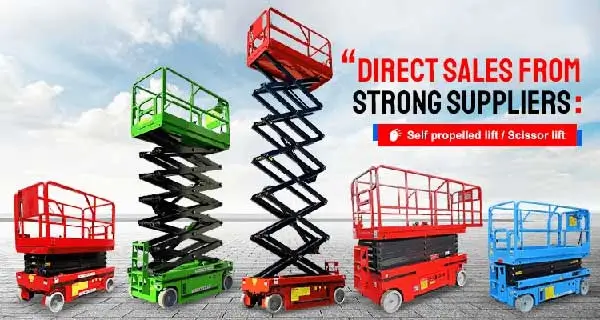
Introduction Hydraulic vs Electric Scissor Lift
When purchasing an aerial work platform, the decision between a hydraulic scissor lift and an electric scissor lift often comes down to one critical factor: total cost of ownership. In 2026, with rising energy costs, stricter emissions regulations, and advanced battery technology, the financial picture has shifted significantly compared to just a few years ago.
DADE Machinery has manufactured and exported scissor lifts to over 80 countries since 2014. Based on our data from thousands of installations worldwide, this guide breaks down the real costs — purchase price, maintenance, energy, downtime, and resale value — to help you determine which type delivers the best return on investment for your specific application.
Quick Cost Comparison at a Glance
| Cost Factor | Hydraulic Scissor Lift | Electric Scissor Lift |
|---|---|---|
| Initial Purchase Price | $4,000 – $15,000 | $3,000 – $12,000 |
| Annual Energy Cost | $600 – $1,200 (diesel) | $80 – $200 (electric) |
| Routine Maintenance/Year | $800 – $1,500 | $200 – $500 |
| Fluid Replacement | Every 6 months | N/A |
| Engine Overhaul | Every 3,000 – 5,000 hrs | N/A |
| Expected Lifespan | 8 – 12 years | 10 – 15 years |
| Resale Value (after 5 yrs) | 35% – 45% | 50% – 65% |
| Estimated 5-Year Total Cost | $18,000 – $42,000 | $8,000 – $22,000 |
Note: Figures based on average 2,000 operating hours/year. Actual costs vary by model, usage intensity, and regional fuel/electricity prices.
1. Upfront Purchase Price: Hydraulic Wins Slightly
Hydraulic scissor lifts typically cost 10% to 20% more upfront than comparable electric models when you match platform height and load capacity. This is because hydraulic systems use more robust steel structures, heavier-duty pumps, and larger cylinders to handle the weight and force requirements.
However, the gap is narrowing in 2026. Chinese manufacturers like DADE Machinery have streamlined electric drivetrain production, bringing lithium-ion battery costs down by approximately 35% since 2022. Factory-direct pricing from verified suppliers now offers electric scissor lifts (such as the DADE CY Series) starting at just $2,800 for a basic 6-meter model.
Bottom line: Hydraulic lifts may have a lower sticker price for heavy-duty models, but the premium for electric is minimal and shrinking fast.
2. Energy Costs: Electric Dominates
This is where the financial difference becomes dramatic.
Hydraulic scissor lifts powered by diesel engines consume roughly 3 to 6 liters per hour, depending on load and engine size. At current global diesel prices ($1.20–$1.80/liter in most markets), annual fuel costs for 2,000 operating hours range from $7,200 to $21,600.
Electric scissor lifts draw between 2.5 to 5 kWh per hour of operation. At an average commercial electricity rate of $0.12–$0.25/kWh, the same 2,000 hours costs only $600 to $2,500 per year.
Over a 5-year period, that’s a potential savings of $33,000 to $95,000 in energy costs alone — favoring electric by a massive margin.
Even hybrid hydraulic-electric models (which use electric motors to power hydraulic pumps) cannot compete with fully electric scissor lifts on energy efficiency.
3. Maintenance and Downtime Costs: Electric Requires Less
Hydraulic scissor lifts demand regular, labor-intensive maintenance:
- Hydraulic fluid changes every 500–1,000 operating hours ($150–$400 per change)
- Filter replacements (fuel, oil, air) adding $200–$600 annually
- Seal and hose inspections to prevent leaks — a major source of costly downtime
- Engine servicing including spark plugs, belts, and cooling system maintenance
- Potential hydraulic pump failure — repair costs of $2,000–$5,000
Electric scissor lifts have dramatically fewer moving parts:
- Battery health checks (mostly automated via onboard diagnostics)
- Motor bearing lubrication annually ($50–$150)
- Structural and electrical component inspections
- No fluids, no filters, no engine
According to industry data from IPAF (International Powered Access Federation), electric aerial work platforms experience 40% to 60% less unplanned downtime than diesel-powered equivalents. For rental companies and large contractors, reduced downtime translates directly into higher asset utilization and revenue.
4. Regulatory Costs: Electric Gains Ground in 2026
2026 has seen tightening environmental regulations worldwide:
- EU Stage V emissions standards now enforced across all member states, adding compliance costs to diesel-powered equipment
- California CARB and other US state programs impose increasing fees on non-road diesel engines
- Indoor use restrictions — many warehouses, airports, and hospitals ban diesel equipment entirely due to exhaust emissions
- Noise ordinances — electric lifts operate at 60–68 dB(A) versus 80–90 dB(A) for hydraulic-diesel models
These regulatory pressures mean hydraulic scissor lifts face increasing operational restrictions and compliance costs, while electric models enjoy broader deployment flexibility and fewer regulatory hurdles.
5. Resale Value: Electric Holds Its Worth Better
Used equipment buyers in 2026 increasingly prioritize electric machines due to:
- Growing demand for indoor-compatible equipment
- Lower total cost of ownership attracting budget-conscious renters
- Environmental, social, and governance (ESG) procurement policies
Data from major equipment auction sites shows electric scissor lifts retain 50–65% of their original value after five years, compared to 35–45% for hydraulic-diesel models. This 15–20 percentage point difference can represent $2,000–$5,000 in additional recovered value per machine.
6. Application-Specific Considerations
The “cheaper” option depends heavily on your use case:
Best for Hydraulic Scissor Lifts:
- Rough outdoor terrain with crawler chassis models (DADE CY Series heavy-duty)
- Continuous high-load operations exceeding 500 kg payload
- Remote locations without reliable electrical infrastructure
- Extreme temperature environments (-20°C to 50°C) where diesel engines perform more consistently
Best for Electric Scissor Lifts:
- Indoor warehouse and facility maintenance
- Airport and hotel operations (noise and emissions sensitive)
- Retail and commercial construction with strict noise ordinances
- Rental fleet deployment where utilization rates maximize energy savings
- Urban renovation projects with limited access for fuel storage
Total Cost of Ownership: The Verdict for 2026
For the typical user operating 1,000 to 2,000 hours per year in indoor or urban environments, an electric scissor lift saves $8,000 to $25,000 over five years compared to a hydraulic-diesel equivalent. The payback period on the initial investment difference is typically 6 to 14 months.
For heavy-duty outdoor applications with extreme loads, hydraulic models remain the practical choice — but even here, the emerging electric-hybrid scissor lifts are closing the gap, offering hydraulic power with electric drive efficiency.
DADE Machinery recommendation: If your primary operations are indoors, in cities, or in emission-restricted zones, electric scissor lifts are the clear financial winner. For mixed-use applications, consider a hybrid fleet strategy.
Why Choose DADE Machinery for Your Scissor Lift?
As a certified CE and IPAF manufacturer with 12+ years of experience, DADE Machinery delivers:
- Factory-direct pricing — no middleman markup on CY Series electric and hydraulic scissor lifts
- Custom OEM/ODM solutions — tailored specifications for your market
- Premium international components — hydraulic systems, electrical controllers, and batteries sourced from trusted suppliers
- Robotic welding and precision manufacturing — 200+ acre production facility with multi-stage quality inspections
- Global shipping support — FOB Qingdao/Jinan, door-to-door logistics to 80+ countries
- Responsive after-sales service — spare parts shipped within 48 hours, technical support within 12 hours
Frequently Asked Questions
Q: Can an electric scissor lift handle the same load as a hydraulic one?
A: Yes. DADE electric scissor lifts (CY Series) handle payloads from 500 kg to 2,000 kg, matching most hydraulic counterparts. The CY2.0 model supports up to 2,000 kg at heights up to 18 meters.
Q: How long do electric scissor lift batteries last?
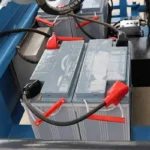
Modern lithium-ion batteries in industrial scissor lifts typically last 3,000–5,000 charge cycles, equating to 5–8 years of regular use. Fast charging (2–4 hours) minimizes downtime between shifts.
How long is the delivery lead time?

Standard models ship within 15–30 days after order confirmation. Custom OEM configurations may require 30–45 days.
Conclusion
hydraulic vs electric scissor lift in 2026 is no longer about which technology is “better” — it’s about which delivers the lowest total cost of ownership for your specific operations. The data is clear: for the vast majority of indoor, commercial, and urban applications, electric scissor lifts save significant money on energy, maintenance, and compliance while maintaining strong resale value.
For heavy-duty outdoor work, hydraulic lifts still have their place — but even this segment is evolving with hybrid and electrified hydraulic systems entering the market.
Ready to find the right scissor lift for your needs? Contact DADE Machinery at [email protected] or WhatsApp +86-15253158110 for a free consultation and factory-direct quote.
Keywords targeted: hydraulic vs electric scissor lift, scissor lift cost comparison, electric scissor lift vs hydraulic, aerial work platform total cost of ownership, DADE scissor lift manufacturer, CY Series scissor lift, CE certified scissor lift, China scissor lift factory
Internal links to add in WordPress:
- Electric Scissor Lifts Product Page
- Hydraulic Scissor Lifts Product Page
- Contact DADE Machinery
- About DADE Machinery
hydraulic vs electric scissor lift
hydraulic vs electric scissor lift
hydraulic vs electric scissor lift
hydraulic vs electric scissor lift
hydraulic vs electric scissor lift
hydraulic vs electric scissor lift
hydraulic vs electric scissor lift
hydraulic vs electric scissor lift